Physical Address
304 North Cardinal St.
Dorchester Center, MA 02124
Physical Address
304 North Cardinal St.
Dorchester Center, MA 02124

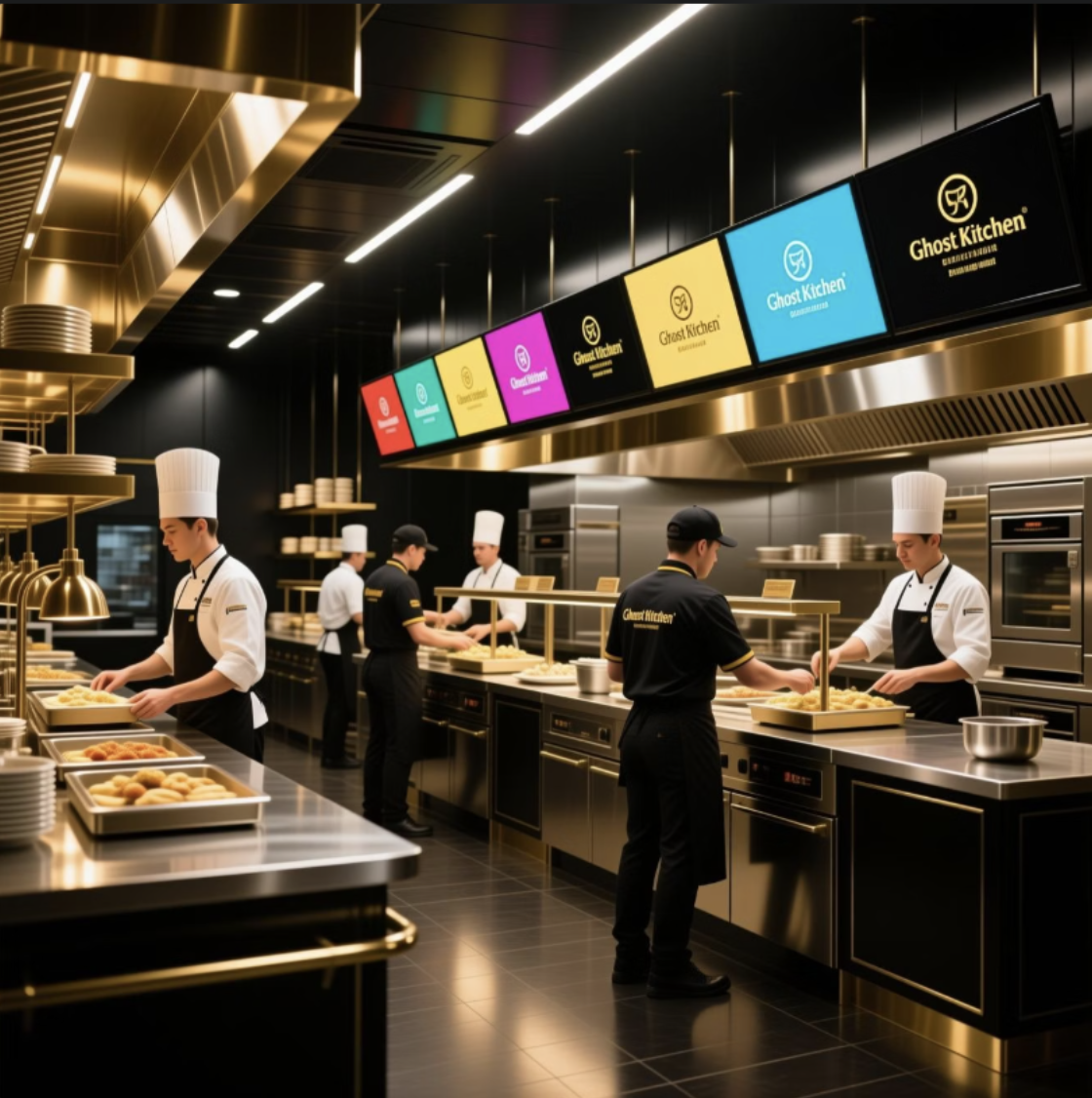
Across the United States, the dream of owning a restaurant has slipped out of reach for many. Rising rents, higher wages, fragile margins, and unpredictable foot traffic have reshaped the industry into something that often feels unforgiving. For a new wave of food entrepreneurs — especially those without access to major capital — the traditional model simply doesn’t work anymore. Kitchenverse™ enters this landscape as a different kind of promise: a delivery-only system where, for $50,000, an individual can launch not one restaurant, but three, housed entirely in a single ghost kitchen.
Its premise is as human as it is economic. The company’s Portland pilot attracted people who might never have stepped into restaurant ownership under old conditions — freelancers, gig workers, culinary school graduates, first-generation immigrants, and working parents who could not afford the risk of a full dining-room investment. Kitchenverse offers them an infrastructure: brand development, menu design, packaging, onboarding, and the critical digital integrations that connect them directly to customers through UberEats, DoorDash, and other delivery platforms.
For many, the appeal isn’t simply the affordability. It’s the flexibility. Ghost kitchens remove the performative element of hospitality — no linens, no servers, no décor, no hours spent calculating how many people might walk through a door. Instead, Kitchenverse gives operators a digital storefront where success is measured by scrolls, clicks, and ratings. And within this system, each operator manages three identities, three menus, three chances for resonance.
The structure is intentionally empowering. If one concept struggles, another can fill the gap. If demand shifts — late-night orders spike, comfort food rebounds, or global flavors trend — entrepreneurs can respond quickly. Kitchenverse’s training encourages adaptability, teaching operators to understand data from delivery apps as a direct dialogue with their customers. Their profit projection of $30,000 per month by Month 3 reflects not just the potential of the model but its dependence on operators who learn to navigate this digital terrain.
But UltraDaily’s perspective must also highlight the human complexity beneath the business pitch. Running three brands is not effortless. It demands stamina, organization, and a willingness to learn the psychological patterns of digital diners. Ghost kitchens erase the dining room, but they don’t erase the work: ingredients must be coordinated carefully; recipes must be executed consistently; peak delivery hours can be relentless. Operators describe the experience as simultaneously liberating and exhausting — a quieter form of restaurant labor that occurs behind closed doors but vibrates constantly with the demands of app-based consumers.
Still, Kitchenverse resonates because it offers possibility. In a national climate where opportunity feels increasingly uneven, a system that lowers the barrier to entry carries weight. For immigrant families, it becomes a bridge to entrepreneurship. For young chefs priced out of major cities, it becomes a platform to build a following without mortgaging their futures. For parents balancing multiple jobs, it becomes a chance to operate on their own terms.
The question ahead is not whether ghost kitchens will persist — they already have. The question is whether companies like Kitchenverse can sustain the delicate balance between accessibility and ambition. The model works best when operators feel supported, not overwhelmed, and when the system’s guidance remains flexible enough to accommodate the identities of the people who join it.
In a world still redefining how we eat and how we work, Kitchenverse represents both a lifeline and an experiment. It is a reminder that even in a fragmented economy, people will continue searching for ways to create, to feed, and to build something of their own — even if it happens behind a door no customer will ever walk through.
